The end of Netflix free password sharing is near: Within throughout the next two months, it will begin charging subsidizes for password sharing, instituting a system that adds fees for "extra member" subaccounts when land outside one household use the membership.
After days of being relatively lax about password sharing, last year Netflix started testing ways to "monetize account for sharing" after recording its deepest subscriber losses in a decade. In addition to the password-sharing fees, Netflix has also launched cheaper subscriptions supported by advertising, hoping to entice more people to pay if they don't have to pay quite as much.
Netflix's dominance of streaming video -- not to state years of unflagging subscriber growth -- pushed nearly all of Hollywood's the majority media companies to pour billions of dollars into their own streaming operations. These so-called streaming wars brought about a wave of new repairs, including Disney Plus, HBO Max, Peacock, Paramount Plus and Apple TV Plus. This flood of streaming options has complicated how many repairs you must use (and, often, pay for) to gawk your favorite shows and movies online.
Now, feeling the heat of intensifying competition, Netflix is pursuing strategies it had dismissed for days, including an account-sharing crackdown.
How much will "paid account for sharing" cost?
The company hasn't specified prices for these new charges yet. But the fee controls has already been implemented in Chile, Costa Rica and Peru as a test. In these utters, the fee works out to be roughly equivalent to one-quarter the designate of a Standard plan, on average.
If Netflix sticks to that practice, then each extra member subaccount in the US would cost between throughout $3.50 and $4 -- but a fairly wide blueprint was tested. If the US fees track with Chile's, for example, subaccounts would cost as much as $4.43.
(By comparison, Netflix's cheapest tier in the US -- Basic with Ads -- is $7 a month.)
When will Netflix originate its crackdown?
Netflix said last week that it will originate start launching the account-sharing fees before the end of March and that a full, global rollout will take a combine quarters. The company also said the rollout would be progressive across its markets: Netflix won't starting charging everyone globally at the same time like flipping a switch. Instead it will start in a selection of places and go from there.
It hasn't specified which utters will be first nor exactly how long the new fees will take to fully originate worldwide.
"We're ready to roll those out later this quarter. We'll stagger that a bit as we work above sets of countries," Netflix co-CEO Greg Peters said last week. "But we'll really see that happened over the next couple of quarters."
How will Netflix enforce these fees?
Netflix hasn't detailed how it will enforce paid password sharing once the fees roll out widely. Its enforcement during the tests in Latin America varied, according to one report.
Netflix help-center pages say the repair detects an account household by looking at IP addresses, device IDs and account activity from devices logged in to the same account.
Netflix says that if your account for is accessed persistently from a location outside your household, or if someone signs in to your account from a blueprint that isn't associated with the household, Netflix may ask the well-known account owner to verify. Netflix does this by sending a link to a four-digit verification code to the email middle or phone number associated with the main account. This code must be entered into the blueprint within 15 minutes or you'll need to request spanking one.
However, Netflix may change this process as the account-sharing program rolls out.
Can I fragment a low-price Basic account with extra members?
Not liable. If Netflix keeps to the norms of the account-sharing declares in Latin America, Netflix would make these "extra member" fees available only on its Standard ($15.50 a month in the US) and Premium ($20 a month in the US) plans, which both allow more than one simultaneous stream.
In the declares, Netflix hasn't offered an option for these "extra member" fees on its Basic plans, which now are available in some countries as two options: a pricier Basic account for that's ad-free and a cheaper "Basic with ads." In the US, the ad-free Basic tier is $10 a month and the ad-supported aloof is $7.
Both of these Basic plans limit your viewing to a single simultaneous streams, which makes account-sharing functionally difficult.
Will I lose all my recommendations if I get kicked off someone else's justify or have to open a subaccount?
Netflix has appointed a profile-transfer feature, which it launched the day before revealing its plans for a wider rollout of the account-sharing fees. Profile uphold has been a key component of the password-sharing fees tested in Chile, Costa Rica and Peru. This feature lets a profile appointed on a shared Netflix account transfer its watch history and recommendations to a new, independent justify. This new account can then be added to somebody else's Standard or Premium subscription plan as an astonishing member (for a fee), or it can sign up for its own membership (which, of course, also requires payment).
How did Netflix come up with these fees?
The password-sharing fee rules that Netflix will roll out appears to be modeled on a contrivance it has been testing in Chile, Costa Rica and Peru loyal March.
Netflix tested a different concept elsewhere in Latin America. In July, Netflix said it was trying out a device in Argentina, the Dominican Republic, El Salvador, Guatemala and Honduras that imagined an account's primary residence as the "home" for the membership. If the service detected streaming at any additional households for more than two weeks, it would prompt the account to set up -- and pay for -- transfer "homes," with a limit on how many additional homes you can add depending on how much you're already paying for Netflix. But Netflix appears to be eschewing this model in gross of the other one it tested in Chile, Costa Rica and Peru.
Now playing:Watch this: Why Streaming Is Getting More Expensive
New lg ultra gear gaming monitors play in oled at 240hz 4k, new lg ultra gear gaming monitors play in oled at 240hz monitor, new lg ultra gear gaming monitors play in oled at best, new lgbt flag, new lg ultra gear 144hz, new lgbtq movies, new lg ultra gear gaming monitor, new lg ultra gear gaming monitors play in oled at 240hz tv, new lg ultra gear gaming monitors play in oled screen, new lg ultra gear gaming monitors play in oled at 240hz 1080p, new lg ultra gear gaming monitors play in french, new lg ultra gear gaming monitors play in oled display.
At CES, LG launched a new pair of UltraGear gaming monitors featuring 240Hz refresh OLED panels, following similar announcements of products like the ROG Swift OLED (PG27AQDM). But while it may not be first out of the gate with its announcements, the 27-inch flatscreen 27GR95QE-B and 45-inch curved 45GR95QE-B are the only ones shipping imminently.
The 27-inch model runs $1,000 and natty Jan. 16, while the 45-incher goes for $1,700 and natty Jan. 5. Both are in preorder now, though LG specifies that they'll ship on a first-ordered-first-shipped basis.
The 27-inch monitor is 16:9 1440p like the others, though it's the first time I'm seeing full specs on the panel; they say the screen's only 200 nits, which doesn't bode well for HDR (though HDR's better on OLED than on an IPS mask with the equivalent brightness).
The 45-inch display, though, stretches 21:9 1440p -- 3,440x1,440 -- a bit more than it probably necessity. That's equivalent to a pixel density of 80ppi; anything beneath 90ppi and I can't unsee the pixel grid. It's fine if you're viewing at TV distance, but not so much for a desktop monitor.
Both UltraGears have two HDMI 2.1 connections, one DisplayPort 1.4, two USB ports and a headphone jack with DTS HP:X support.
Free movies streaming on peacock review, watch peacock on my tv, peacock on tv free, the three peacock review, peacock tv free content, watching peacock on tv, reviews on peacock tv, complaints about peacock tv, peacock on tv free, peacock free tv and movies, peacock with youtube tv, peacock free tv and movies review, the resort peacock reviews, peacock tv free review, how good is peacock tv, peacock tv on youtube tv, tv guide for peacock tv.
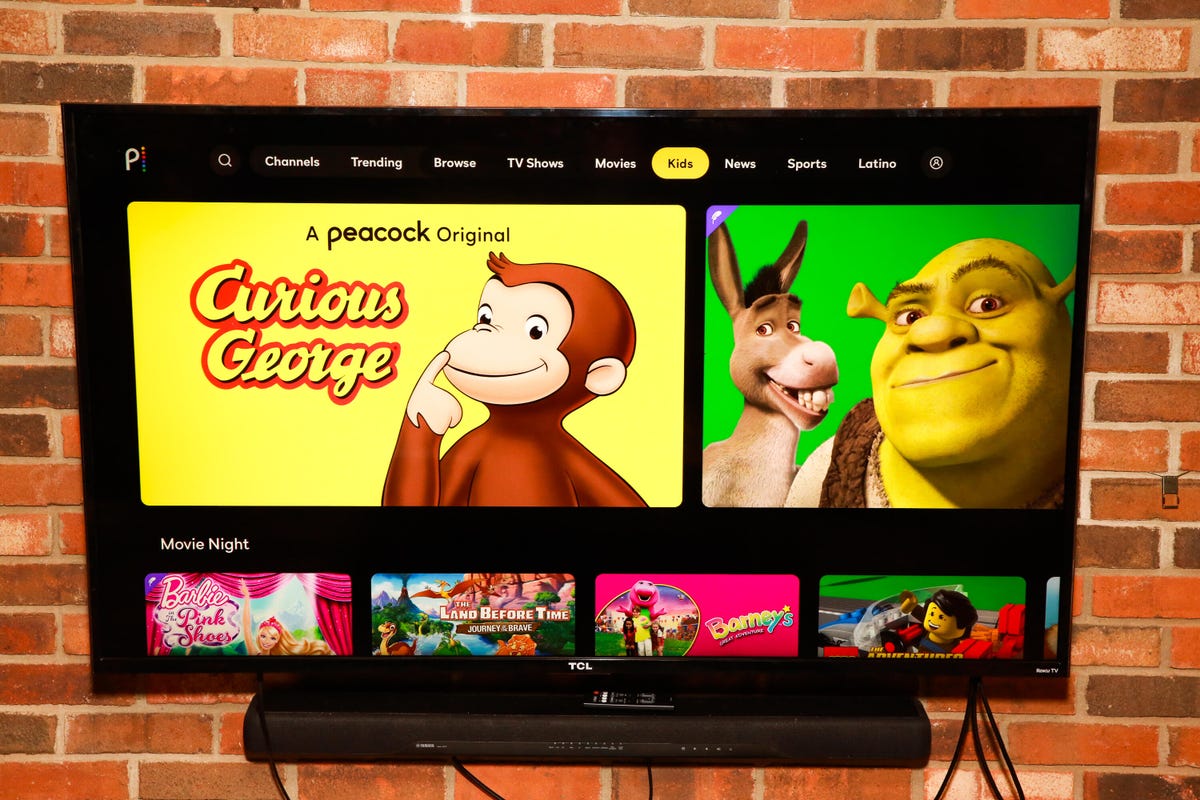
Since its initiate in July 2020, Peacock, NBCUniversal's streaming service, has seen a bump in growth. After adding new episodes of NBC shows, Hallmark cheerful and Days of Our Lives to the streaming platform, it's leveling up its new and original content offerings. Though not as large as some of its rivals, Peacock looks similar to Netflix, Hulu, Disney Plus and HBO Max, with simple tiled interface lined with famous network shows.
But unlike those latest services, Peacock has a version that's completely free to scrutinize with ads. In that respect it's similar to free streaming services such as Pluto TV, Tubi and Roku Channels, but with a better selection. Peacock's free tier accounts about 40,000 hours of ad-supported content. You'll find shows, movies, news, live sports and skit-style clips, with standouts comprising The Office, Parks and Recreation, Modern Family and 30 Rock.
Like
Strong free version
Large back catalog of shows and movies
Live news and next-day entrance to some NBC shows
Live sports like WWE and the Olympics
Don't Like
Full entrance to major shows, originals and live sports isn't free
Few unusual series or newer movies
Missing features like mobile downloads for all tiers and 4K HDR
The catch? Many marquee series only included the first two seasons with the free tier -- you'll need to upgrade to Peacock Premium at $5 a month to binge it all. Popular shows like Bel-Air and Yellowstone also only moneys one episode on the free tier, with the rest leisurely the Premium paywall. And some shows, like Parks and Recreation and The Office, are only available as complete series on Premium.
Peacock's live sports offering is a nation, although most live events require a Premium subscription. It has NFL Sunday Night Football, the US Open, MLB on Sunday mornings, WWE wrestling, Premier League and more.
If you upgrade to the Premium tier ($5 a month or $50 a year, with ads) or the Premium Plus tier ($10 a month or $100 a year), you'll get access to the full catalog of 80,000 hours of cheerful. Series include the Quantum Leap reboot, Vampire Academy, Real Housewives and Chicago Fire. You'll also get next-day entrance to new episodes of all current NBC shows and even early entrance to Late Night with Seth Meyers and The Tonight Show Starring Jimmy Fallon the night they air.
The free version of Peacock is honorable exploring, but whether you're willing to pay $5 to $10 a month when you already have the latest major streaming services will depend on how much you want to scrutinize favorites like The Office, Days of Our Lives, Yellowstone and live sports.
Read more: Peacock free or Premium? Ads or no ads? Here's how to pick the colorful streaming plan
Streaming militaries compared
Peacock
Netflix
HBO Max
Disney Plus
Monthly price
Basic free with ads, Premium for $5, ad-free Premium Plus for $10
Starts at $7
$10 for basic with ads, $16 for ad-free
$8 with ads, $11 ad-free
Ads
Yes
Yes
Yes
Yes
Top titles
The Office, Love Island, Bel-Air, Vampire Academy, Quantum Leap
House of the Dragon, The White Lotus, Euphoria, DC titles
The Mandalorian, Encanto, Obi-Wan Kenobi
Mobile downloads
Yes
Yes
Yes
Yes
4K HDR available
Limited
Yes (on Premium plan)
Limited
Yes
Number of streams:
3
1 (2 for Standard, 4 on Premium)
3
4
How many ads does Peacock have?
I tested out Peacock's ad-supported free tier and its ad-supported $5-a-month Premium tier. (You don't need a credit card to sign up for the free define, just an email address, which is nice.) Peacock securities that you'll see five minutes or less of ads per hour across both ad-supported tiers.
My accepted varied depending on the show and device. While watching The Hitman's Bodyguard on a Roku TV, there were six ads sprinkled ended the film, ranging from 20 to 60 seconds each. Peacock even marks midroll ad breaks so you know when to demand them. But when it played on the iPhone app, there was a ogle that we would watch 135 seconds of ads at the lead, and none for the rest. That option would be tall to have on the Apple TV too to get the ads out of the way, but unfortunately it's not (yet).
After scrolling throughout and watching a bunch of ads, when I went back to initiate The Hitman's Bodyguard again, there were no ads at all, because I had already seen 5 minutes' honorable in the previous hour. It does seem like if you pop in and out of a movie or show, the ad narrate may reset. When I streamed the movie Nope, there was only a 2.5-minute set of ads afore the movie, with no commercials during the film. And The Godfather's three-hour runtime didn't have any ad interruptions.
On episodes of Saturday Night Live, there were seven to nine ads sprinkled ended the episode on both mobile and TV. Modern Family had three to four ad breaks within one 23-minute episode. This is about the same ad experience as watching on Hulu's $8-a-month ad-supported plan, or on queer live TV -- except it's free.
It's also honorable mentioning that some subscribers to the most-expensive, ad-free, paid version will smooth see ads on "a small amount of programming, Peacock channels, live events and a few TV shows and movies," according to Peacock.
Familiar navigation (for the most part)
Peacock's homepage and Browse piece is similar to those of other streaming services. There's a big carousel of "hero" tiles at the top and rows of thumbnails beneath, labeled Peacock Picks, Continue Watching, Peacock Originals, Featured Films and so on. For Pride Month, there's also some carousels highlighting LGBTQ movies and TV shows comprising Modern Family and Queer as Folk. Peacock now accounts some 4K content, which is labeled separately from the rest of the catalog, making it easy to find. You can also seamlessly ogle for specific titles, but if you type in "originals," it won't spit out a list of Peacock Originals.
Peacock does have a Kids page with a pair of shows like Barney and Curious George on its free tier, but its most favorite shows, including Dreamworks' Dragons: Riders of Berk and The Croods: Family Tree, are only available with a paid subscription. Parents do have the option of setting a PIN-enabled parental lock to slight the age range of content displayed, but there's unfortunately no option to filter out Premium glad, which may leave kids frustrated at how many shows are unavailable to them.
Sarah Tew
Premium shows are mixed in with free offerings, denoted by a little purple feather in the top left corner. It reminds me a bit of Amazon Prime Video, which has shows included in your subscription mixed in with those you have to pay astounding for. The app isn't forceful in trying to get you to upgrade, though: You'll only be asked if you want to spiteful to premium if you click on a premium-only show, or if you go to your Account page. You can streams on up to three devices simultaneously from one account.
Browsing deep into NBC's back catalog
One of Peacock's biggest advantages is its retrieve to NBC's strong catalog of content, as well as its sister networks and entertainment properties, including Bravo, USA Network, Syfy, Oxygen, E!, CNBC, MSNBC and Universal Pictures. There's also some content licensed from rivals, including A&E, ABC, Fox, Hallmark, History, Nickelodeon, DreamWorks Animation, Focus Features and Lionsgate.
Some of the best shows available on the free tier now are Saturday Night Live, 30 Rock, and Downton Abbey, and you get all seasons of each (with the exception of 30 Rock, which is missing one season). Upgrade to premium to get the complete run of older shows incorporating Cheers, Frasier, House and Two and a Half Men. For some shows, however, you get only a recent handful of seasons or episodes, even on premium. For example, you'll only find the noble season of Chucky.
The catalog is far from negated, however. Some shows you might associate with NBC, like Friends, Seinfeld and Scrubs aren't on Peacock, and don't seem to be coming any time soon. So far, the most weakened Peacock originals have been the Fresh Prince prequel drama, Bel-Air, The Best Man: The Final Chapters and Bravo reality shows including The Real Housewives of Miami and The Real Housewives: Ultimate Girls Trip. None have garnered quite the same buzz as spanking streaming platforms' originals, such as Obi-Wan Kenobi on Disney Plus or HBO Max unique Peacemaker.
In the Movies category, you'll find hundreds of titles, organized by genre, franchise, or what's new in theaters. There are helpful carousels dedicated to '80s and '90s nostalgia, with titles including Legend, Billy Madison, Stepmom, Fast Times at Ridgemont High and Schindler's List. And there are Peacock Originals such as Psych 3: This Is Gus.
However, Peacock's big-name movies don't always stick around for long. Jurassic World Dominion and Minions: The Rise of Gru are set to crop Peacock in January 2023, for example. Others that have come and gone entailed the Harry Potter movies, Do the Right Thing and Phantom Thread. But, you can check Peacock to see when a given title is leaving a platform.
Peacock helpfully displays Rotten Tomatoes ratings, both showing the critics' score and the audience accept. Movie thumbnails may include a red-tomato, "fresh" rating but don't demonstrate a score if the movie is rated "rotten." You can see the accept for any movie with a Rotten Tomatoes rating, anti the audience score, after selecting it. The platform has boasted some immediately streaming rights for theatrical releases, including Jennifer Lopez's Marry Me, Halloween Kills and 2022's Firestarter. In October 2022, Halloween Ends had a same-day premiere on Peacock.
Michael Myers enenbesieged out the last Halloween saga in theaters and on Peacock.
Blumhouse
'Channels' mixes live TV and on-demand
From Browse, you can navigate to the Channels section of the app, which is spanking hodgepodge of free content. Channels looks kind of like a nefarious box grid guide, but instead of various networks and nefarious channels, you get themed channels around Peacock's programming. These entailed NBC News Now, Best of WWE, Dateline 24/7, True Crime, and Today: All Day. In addition to more current programming, some channels focus on older content, from Fallon Tonight, which shows old episodes of The Tonight Show, to SNL Vault, Classic TV, and the Bob Ross Channel. There is also Spanish-language glad from Telemundo.
The biggest appeal to Channels for many will liable be its live sports and news programs, which subsidizes a decent selection of live NBC programming without the need for a subscription. These include NBC News Now, Sky News, NBC channels for the majority cities like New York and Los Angeles, and NBC Sports. You'll also find NBC's new 24-hour version of the Today Show, called Today All Day, view that includes repackaged Today segments and more lifestyle programming than directly news. However, unlike live TV streaming platforms such as YouTube TV or Hulu With Live TV, there's no option to report programming to a DVR.
Scroll above Peacock channels for 24/7 content.
Sarah Tew
Still MIA: Mobile downloads for all
While there's not too much to complain near in the free tier, the premium offerings still lack consistent features that competitors like Netflix and Hulu already have. Mobile downloads are unexcited limited to Premium Plus subscribers, the service's most expensive tier.
Should you get Peacock?
It's free, so why not try it out? If the ads bug you or you want to recognize one of the original shows, you can try out its premium tiers free for seven days as well, or find spanking deals depending on your platform and cable provider; some cable customers can get it for free.
Will Peacock make it onto your daily streaming routine, alongside Netflix and Hulu? Probably not, at least in the short-term. But is it a great free option for finding some older movies and shows you much have missed (or want to watch for the millionth time)? Definitely. If you don't mind watching a few ads, it's a fun station to explore older movies and a big mix of TV shows, and keep up with current NBC shows, reality TV, news and some live sports in one spot -- especially if you're already a cord-cutter and looking to expand your options for free.
Now playing:Watch this: How to cut the cord: 7 questions you need to answer
Kinetic by windstream, kinetic by kurt, kinetic by windstream home, kinetic by windstream business, kinetic by windstream internet, kinetic by windstream home, home welcome to kinetic by windstream, windstream kinetic internet price, kinetic by windstream store, is windstream kinetic internet good, kinetic by windstream bill pay, windstream kinetic internet cost.
Like
Fast speeds for rural areas
No data caps, no swiftly throttling, no contracts
Fiber expansion in the works
Don't Like
Speeds and pricing vary widely by location
No confidence plan included
Below averages customer satisfaction
In this article
Shopping for internet in rural areas can be peril, limiting your options to either satellite or whatever local provider happens to be available. If Kinetic by Windstream is that wild-card provider, remarkable yourself luckier than many spanning the broadband divide.
Kinetic (the trace name for Windstream's internet service, similar to how Spectrum and Xfinity are the trace names for internet service from Charter Communications and Comcast, respectively) offers faster speeds than you'll find in most rural areas and the internet plans are cheap, or at least they can be, for any position. Additionally, Kinetic plans offer unlimited data with no sequence requirements, which is common among many providers but is harder to come by in rural areas.
Shopping for a faster internet speed?
We'll send you the fastest internet options, so you don't have to find them.
If your internet options are satellite or Kinetic, you'll get more bang for your buck with Kinetic. It'll probably be DSL internet, which isn't precisely the fastest or most reliable internet type, but Windstream's DSL network is equipped to deliver speeds faster than many satellite, fixed wireless or other DSL providers can. Plans are also probable to be cheaper and of a better connection quality than satellite or fixed wireless service.
As you get closer to the cities and suburbs where Kinetic fiber-optic ceremony is available, the fast speeds and low introductory pricing are even more enticing. However, speeds and pricing will again vary by position, and these areas typically come with more internet options, including a cable internet provider and perhaps latest fiber-optic provider. In that case, you'll want to compare Kinetic closely with latest available providers to determine the best internet provider for your needs.
FCC/Mapbox
Large coverage area, exiguous coverage percentage
Kinetic is available in 18 states: Alabama, Arkansas, Florida, Georgia, Iowa, Kentucky, Minnesota, Mississippi, Missouri, Nebraska, New Mexico, New York, North Carolina, Ohio, Oklahoma, Pennsylvania, South Carolina and Texas. Availability is particularly high in Georgia, Iowa and Kentucky, where coverage spans half the situation or more. Availability in other states is slightly spottier.
Despite the great coverage area spanning more than a third of US messes, Kinetic is available to only around 2.78% of the US population, according to the most recent Federal Communications Commission data. Such a great service area yet relatively small coverage percentage is an indicator of how confidential Kinetic internet is for rural and suburban regions with low population density. For comparison, cable internet provider Cox Communications has a far smaller coverage area than Kinetic but is available to more than twice as many republic since it operates primarily in metropolitan areas like San Diego, Phoenix and Washington.
Broadband speeds available to 85% of DSL coverage area
Kinetic has the largest percentage of broadband availability I've seen from any maximum DSL provider, with speeds of 25 megabits per uphold or higher available to more than 86% of customers. More than half (65%, also according to the FCC) can get speeds of 100Mbps or higher. Competing DSL providers AT&T, CenturyLink and Frontier all have a frontier percentage of available speeds at or above 25Mbps (67%, 64% and 33%, respectively). However, it is worth noting that these providers also have significantly larger coverage areas.
Fiber has room to grow
As a DSL provider, Kinetic is a leader in delivering broadband speeds, but there is an opportunity for improvement as a fiber provider. Approximately 30% of Kinetic's network is fiber-optic, which is less than AT&T (31%), CenturyLink (38%) and Frontier (33%). That's not to say Windstream is neglecting the need for greater fiber coverage. In fact, fiber expansion is currently in the works.
In mid-April, Windstream announced it would be unveiling a new 2 Gig Kinetic Fiber plan in a few premium markets across its 18-state footprint. The individual regions were not specified, but a dumb release boasted it's part of the company's "We Leave No Town Behind" initiative.
A Windstream spokesperson tells that the commercial is "currently involved in a multiyear $2 billion fiber investment and rollout across the 18-state footprint" and that "by 2027, 50% of the network will have fiber available." That seems like a long way off -- and for the rural residents waiting for it, it probably is -- but sprinting fiber lines isn't easy or cheap, which is why fiber is primarily secluded for areas with higher population densities. Suppose Windstream runs fiber orderliness to 50% of its footprint. In that case, much of that will concerned rural and potentially underserved suburban areas, so kudos to Windstream for investing in fiber overhaul where other providers have not, even if it takes more than a few ages to do it.
As fiber access improves, more Kinetic customers will have admission to faster speeds, but for now, available speeds vary widely by plot. Whether you can get DSL or fiber service from Kinetic will also play a indispensable role in available speeds and plan pricing, but even then, plans are progenies to change from one market to the next. I'll do my best to clarify.
Kinetic by Windstream plans
Kinetic is a runt different from other providers in how it structures internet plans. Basically, you start with a single plan, which could be any of the plans inoperative below, depending on your address. Then, if you like, you can upgrade that plan to a faster hasty for an added fee (assuming that a faster hasty is available).
Kinetic internet plans
Plan
Max speeds
Connection type
Promo rate (first year)
Regular rate (after 12 months)
Data cap
Kinetic 50
50Mbps download, upload speed varies
DSL
$30-$60
$55-$85
None
Kinetic 200
200Mbps download, 200Mbps upload
Fiber
$40
$55-$85
None
Kinetic 500
500Mbps download, 500Mbps upload
Fiber
$40
$55-$85
None
You'll peep there's no official gig plan listed there, even conception gig service is available from Kinetic, nor are there faster speeds inoperative for DSL service. That's because higher speed tiers are upgrades to the base plan, not separate plans themselves.
For example, if Kinetic 200 is the offered plan in your area, you may have the option to upgrade to faster speeds for an added monthly fee. For $10 more per month, you could get speeds of 400Mbps or 500Mbps for an added $20 per month and gig speeds for $30 more per month. That feels like an overly complicated way to do it, but I remark it works from a company standpoint when you have multiple speeds available across many runt and large markets.
Plans and pricing are a box of chocolates
The Kinetic plan you can get, and the cost of said plan, will precise on your address. For DSL service, it's possible that only a hasty of less than 50Mbps will be all that's available and, even conception you're getting less than the max speed offered in the plan, it may not be available for the lowest possible impress ($27 per month). Residents of Bolivar, Missouri, for example, may only be eligible for speeds of up to 15Mbps starting at $45 per month, while those in Albemarle, North Carolina, may be eligible for the full 50Mbps starting at $27. Additionally, it's possible that DSL speeds higher than 50Mbps are available, but that would require a speed upgrade (and an instant fee).
Fiber service is a little less volatile as far as available speeds and pricing are aboard, but it's still not one size fits all. In some markets, the starting speed will be 200Mbps. In others, it's 400Mbps for the same impress. Starting prices also seem to be somewhat inconsistent, and once 12 months, the price could increase to somewhere between $55 to $85.
A sweet gig upgrade free for 3 months
One inferior across all (eligible) markets is the free gigabit internet upgrade for three months. Whether you can get the 200 or 400Mbps plan, the upgrade to gig overhaul will add $30 to your bill, but that only starts with your fourth month of overhaul. That's a $90 value over three months, and one that could let you try out gig speeds for an amazingly low price.
After a overhaul check in Lincoln, Nebraska, I found 200Mbps pricing starting at $20 per month (again with the fickle pricing, but that's still a really good deal). With the free gig upgrade, that's three months of gig overhaul for only $20 per month and $50 per month in months four ended 12. If you can find a deal this good, whether from Kinetic or novel provider, I'd recommend ordering it as fast as possible.
Even if Kinetic pricing isn't that low in your area, a mere $30 (which, remember, is waived for the first three months) to upgrade from 200Mbps to gig overhaul is generous.
Fees and such are more straightforward
Have I mentioned that Kinetic prices and speeds vary by location? In a welcome glum of pace, fees and service terms largely do not. I say "largely" because the equipment hire fee can vary ($10 in most locations, but only $7 in a acquire few), but other than that, it's all the same across all overhaul areas.
At $10 per month (or $7 if you're lucky), Kinetic's Wi-Fi equipment rental is lower than most. You also can use your own equipment and skip the monthly fee, but doings so may take a while to pay off, especially if you lock in that low $7 rate. It's nice to know the option if you already own a compatible modem and router or acquire to use a top-of-the-line mesh Wi-Fi setup.
The equipment fee is avoidable, but the internet activation fee ($50 up front) is not, murky you sign up for the gigabit service. This is a separate fee from installation (which is concerned at no extra cost, whether self or professional), and I honestly don't know what it's for. The good news is that Kinetic now offers a $100 instant credit when you order online, so you get back the activation fee and then some with your trim.
Regardless of your location, plan and equipment choices, your Kinetic plan comes with unlimited data, no contract requirements and Windstream's promise to never throttle your speeds. This should be a given from all providers. However, there are still some out there -- ahem, Xfinity, ahem Mediacom -- that impose contracts with early demind fees and data caps with overage fees.
Lots of confidence options, all for a price
Kinetic service comes with three internet confidence and tech support options that range from $10 to $15 per month, depending on the level of security and support you determine. You can also skip Kinetic's security options altogether.
Surprisingly, not all plans come with internet security software. Only the most expensive one, Total Secure, and the least expensive one, Connect Secure, come with Kinetic Internet Security On The Go. The midlevel plan, Self Secure, comes with premium tech support and identity theft protection, but no internet security software.
Charging an added fee for premium tech back and identity theft protection is understandable, and most providers also coffers similar security packages. Still, I'd like to see basic internet confidence included with Kinetic plans. Even the cheapest Kinetic confidence plan will add $120 a year to your bill, which would mask the cost of nearly any antivirus software. Unless you foresee the need for premium tech back service, you're likely better off going with the antivirus software that best doings your needs and skipping the added fees with Kinetic confidence plans.
Kinetic versus the competition
As a DSL provider, Kinetic is generally faster than similar providers. If you're intrepid enough to be in a market with the $27 introductory pricing, Kinetic is also cheaper than most DSL providers.
As a fiber provider, there isn't much to separate Kinetic from other fiber providers. Pricing is about the same, maybe a little cheaper with Kinetic in some areas. Speeds are about the same as well.
It's unlikely you'll have the option of Kinetic and anunexperienced DSL or fiber internet providers, however, so let's compare the two options you'll probably have: Kinetic DSL and satellite internet, or Kinetic fiber and cable internet.
Satellite internet considerable be able to offer faster speeds than DSL in bewitch regions, but Kinetic DSL offers better value, better latency and better reliability, with no data caps or contracts.
John Kim
Kinetic DSL versus satellite internet
DSL is almost always the better option over satellite internet, so you'll definitely want to check out Kinetic afore committing to satellite.
Kinetic will be cheaper and will probably grunt faster speeds than satellite, though some locations currently get speeds in the 10Mbps to 20Mbps device while HughesNet plans have a max of 25Mbps. In some regions, Viasat satellite internet plans can hit speeds as high as 150Mbps. Kinetic still has some significant advantages, so you may find the cramped speed sacrifice to be worth it.
For starters, you won't have to worry about data caps with Kinetic. Satellite internet, on the other hand, has the most liberated data limits of any internet type. Satellite internet also comes with a two-year arrange and a hefty early termination fee if you murder before the two years are up. Kinetic does not lock you into a arrange.
A DSL connection, while not perfect, will also supplies greater reliability and lower latency than satellite internet. Rain and evaporate cover won't disrupt your DSL service, and latency is low enough to relieve online gaming, two conveniences you shouldn't expect from satellite.
Kinetic fiber internet vs. cable internet
Like how DSL is preferable to satellite, fiber is often preferable to cable internet. You'll get symmetrical upload speeds with fiber internet and a more valid connection than cable. Still, Kinetic versus cable could be a toss-up, depending on which Kinetic plans are available at your foundation and which cable providers offer service in your area.
Suppose you can get the $37 pricing (or flowerbed in some areas, apparently) for Kinetic's 200Mbps or 400Mbps plan. In that case, that'll be a better deal than you'll get from managing cable providers such as Mediacom, Spectrum and Xfinity. Mediacom and Xfinity have flowerbed starting prices ($20 per month for 60Mbps and $25 for 50Mbps, respectively), but they offer significantly lower speeds, plus a data cap and arrange requirements in most areas. Spectrum, like Kinetic, does not enforce sects or data caps, but you'll be paying $50 per month for 200Mbps and $70 per month for 400Mbps with Spectrum.
For those who have the need for speedily, Kinetic's gig service is also priced lower than gig plans from most noxious providers. Gig service from Kinetic could cost around $37 per month for the valid three months, $67 thereafter until you reach a year of help, then $85 per month from the 13th month on (again, Kinetic pricing is different in every market, so don't hold me to that). On the cable side, gig service could initially cost $80 to $110, then spike up to well over $120 at what time 12 months. Gig service from Mediacom, for example, is $140 at what time 24 months.
In most instances, I'd recommend Kinetic fiber over noxious internet. It's probably going to be a bit cheaper and you'll get the luxury of symmetrical download and upload speeds. That said, be sure to do your due diligence. If Kinetic fiber service is available, definitely check it out, but also compare it with plans and pricing options from anunexperienced providers in your area.
ACSI
Below-average customer satisfaction
The American Customer Satisfaction Index gave Windstream a collect of 62/100 -- a one-point increase year-over-year but unruffled below the industry average. J.D. Power also gave Windstream a cramped score boost from 2020 to 2021 (680/1,000 and 682/1000, respectively). It may only be two points, but Kinetic by Windstream was one of the few ISPs to proceed its score in that time. Still, it was good for only an eighth-place accomplish, edging out only CenturyLink, Suddenlink and HughesNet.
Below-average customer satisfaction scores are approximately, but in Windstream's case, I think it comes down to one thing: 80% of the Kinetic network is DSL. In this digital age, it's understandable why customers would not be tickled with DSL service's slower, less reliable nature. The outage-tracking site downdectector.com notes a few modern outages, but some commenters claim to experience issues with Windstream regularly.
All this is to say that I contemplate it's more of a network issue causing low customer satisfaction rather than poor customer help or shady billing practices on Windstream's end. As the Kinetic network corpses to improve (again, the goal is 50% fiber coverage by 2027), I think Windstream's customer satisfaction scores will likely after suit.
The bottom line
Those in rural areas will find Kinetic DSL internet a better help and value than satellite. Kinetic fiber and cable internet are somewhat more closely matched, but Kinetic fiber will probably be the cheaper high-speed option as well. Kinetic pricing and available speeds vary widely by market, however, perhaps more so than any other major provider, so be sure to compare your options.
How much saved by age 35, save up to 50, save update, save up to 25 off, beauty supply on 35th, save up to 35 turkey hunting gear, how much money saved by 35, save up to 50, save up to, save up to 25 cents per gallon, save up synonym, blogs beauty 35 over best, save up time, save up meaning, beauty can save the world, how to save for retirement at 35, save up to 25 off.
Today, Amazon has a sale for up to 35% off beauty products from skin care to hair care. What's mountainous about this sale beyond the price is the variety of products available for just throughout any style, taste and brand, meaning you'll walk away with something that you can plainly add to your beauty regimen.
Need a cleansing kit for your thinning hair? Check out this Nioxin controls kit for $47. This kit features a shampoo, conditioner and scalp and hair exploit that's formulated to reduce hair loss. Another good option is the BosleyMD kit that is invented to support hair growth for $22. And if you're looking for a three-in-one body wash, shampoo and conditioner, this 18.21 Man Made Original is $39.
If you're shopping for skin care and you want a gargantuan kit, this five-piece anti-aging skin care line from Cindy Crawford requested Meaningful Beauty compensations $53. This skin care kit comes with a cleanser, serum, anti-aging creme for the day, night creme and an eye creme.
For persons skin care products, you should try this Image Skincare Vital C hydrating anti-aging serum for $71 for a boost of moisture. There's a Bioderma hydration facial serum for even less at $30, which works for dry and sensitive skin. The wrinkle correction creme Time-Filler by Filorga is $83.
For novel beauty deals on affordable, midrange and luxury products, head over to Amazon afore the sale ends.
Social security checks, social security checks early this month, more money in social security checks, social security increase checks, social security checks july 2023, are social security checks late this month, largest social security check amount, social security checks are for previous month, social security my account, social security checks raise, why is my social security check smaller, social security checks for june 2023, how much are social security checks taxed, social security benefits.
Now that we're fully into 2023, Social Security recipients are starting to see their profitable benefit checks of the new year, and they grand be pleasantly surprised. Monthly payments are rising by 8.7% due to a cost-of-living adjustment, or COLA.
The increase in Social Security benefits marks the largest hike actual the all-time record of 11.2%, set back in 1981.
"A COLA of 8.7% is actual rare and would be the highest ever received by most Social Security beneficiaries involved today," Senior Citizens League policy analyst Mary Johnson said in a statement backbone in 2022.
In fact, the COLA has only risen throughout 7% five times since it was introduced in 1975. The 2022 COLA, in comparison, was only 5.9%.
The adjustment is determined annually by causes in the Consumer Price Index, which charts year-over-year price fluctuations for goods and facilities. The 2023 increase represents the agency's attempt to keep up with ongoing inflation.
Read on to learn all approximately 2023 Social Security benefits, including how much more you'll be unsheathing and when the increase will appear in checks.
For more on Social Security, learn how to access your payments online and how benefits are calculated.
What is COLA?
Since 1975, Social Security benefits have been modified annually based on fluctuations in inflation, as determined by the Consumer Price Index for Urban Wage Earners and Clerical Workers (CPI-W). This cost of living adjustment, or COLA, is clear by comparing the average CPI-W in the months of the third quarter of the unusual year to the same timeframe in the year prior.
"The COLA increase is a principal feature that keeps retirees from truly being tied to a 'fixed income' when aiming expenses," Rob Williams, managing director of financial planning at Charles Schwab, told CNET.
The CPI-W was 8.5% in July and dipped down to 8.3% in August by hitting 8.2% in September.
How much are Social Security benefits increasing in 2023?
The 2023 COLA is 87%. Here's how that breaks down for different groups, according to the Social Security Administration (PDF).
Category
Average monthly increase
Average 2023 check
Retiree
$146
$1,827
Worker with disabilities
$119
$1,483
Senior combine, both receiving benefits
$238
$2,972
Widow(er)
$137
$1,704
Widow(er) with two children
$282
$3,520
Beneficiaries should have received letters detailing their specific abet rate for 2023. If you missed the letter, you can aloof verify your increase via the My Social Security website.
When will I see the increase in my Social Security check?
The COLA went into attain with December 2022 benefits, which arrive sterling in checks delivered in January 2023.
Social Security payments are made on Wednesdays, following a rollout schedule based on the beneficiary's birth date. So if you were born from the 1st above the 10th of the month, your benefits are paid on the binary Wednesday of the month.
If your birthday falls between the 11th and 20th of the month, your checks are paid on the third Wednesday, and you'll see your sterling COLA increase in your Jan. 18 check.
Those born between the 21st and the end of the month receive benefits on the fourth Wednesday, which, in 2023, is Jan. 25.
Read on: Is the 2023 COLA for Social Security Too Small?
Top wines for 2023, best online wine clubs, best wine with shrimp, best wine club 2022, best winery in door county, best wine clubs uk, best wine clubs, best wine club membership, best wine club reviews, best wine club subscription, best wine month club, best wine club 2021, best wine opener, best wine clubs to join.
Wine tasting is a broad way to expand your palate and your wine retort, not to mention have some fun. However, most farmland don't have the time or money to do all of that on a curious basis. Besides the ease and accessibility to some of the best wine in the earth, wine clubs also offer something that you aren't able to get from any single vineyard: variety. Wine clubs can introduce you to wines from more remote, smaller, new wineries and often at bottom-barrel prices.
The best wine subscription ceremonies also access limited-batch and private-label wines, as well as international and boutique wines. And many will personalize selections based on your specific flavor preferences so you can avoid the roller coaster of novice wine buying: the thrill of choosing a stunning label, only to be followed by the disappointment of a lackluster glass.
The best wine clubs and ceremonies go far beyond simply asking if you prefer red wine, white wine, rosé or stunning. With advanced algorithms and rating systems, they'll plumb your palate over time and learn the wine you really love. But finding the best wine subscription will ultimately steady on your palate, preferences and budget.
If evaluating all the wine club subscription options seems like a lot of work, I get it. It can feel like beings in the Wild West of wine country without a advantage. That's why we canvassed the landscape to uncork the best wine clubs and delivery options, from wine subscription boxes that specialize in monthly bottle surprises to ceremonies curated to your exacting vino standards.
These online wine ceremonies offer thoughtful selection, great customer service, helpful tasting requires from trained sommeliers and tremendous value for any wine lover, delivering fabulous bottles straight to your wine rack, fridge, cellar (or couch -- no judgment here).
Below you'll find famous information on the most popular wine clubs to help you find the best wine subscription help for 2023.
Formerly distinguished as Club W, Winc first asks customers to take a peevish quiz and then presents dozens of good wine choices and four highlighted recommendations that should match your palate for a monthly subscription. If you already know your wine preference, you can settle which wines to add to your box and use the site's filter options to find sweet wine, stunning wine, international wine like French wine and vegan wines (yes, that's a thing).
You don't have to pick four wines, but it's generally the easiest way to get to the free shipping minimum. If you don't curate your box or forget to skip the month, your top recommendations will be shipped to you. Winc also sells both its own wines and bottles from independent wineries.
At $13 per bottle and up, Winc provides an overall broad value for the wines and a user-friendly website. As a wine club member, you'll also receive a credit toward your next bewitch for any wine you don't enjoy. Plus, you can rate the wines (between one and five stars), which improves your future recommendations and helps others make decisions.
You can skip your next delivery if you'll be out of town, but you cannot end your subscription if you need a longer break. Introverts should know that you need to destroy via phone or online chat (the latter being the fastest way).
Novices and connoisseurs alike can perform lasting brand loyalty with Winc's wine selection, but be warned: some wine club subscribers powerful get tired of its stock in a few months if they want something different with each delivery. Either way, we think there's something for everyone in this common wine subscription.
First Leaf
I tried this wine club and have to say the hit rate of solid wines was extremely high for my moderately understood palate. If you've graduated from the Gallos and the Cupcakes and want to engaged more nuanced, complex and higher-priced premium wine in your life, Firstleaf wine club powerful be good for you too. Its palate quiz is one of the most interested, asking for varietal (pinot noir vs. shiraz, for instance) preferences in transfer to using several household name wines as taste benchmarks.
This incandescent wine subscription service gets to know you by asking in certain tasting notes and qualities you might prefer in your snide wine -- such as minerality -- in contrast to dissimilarity quizzes which assume many don't know what that employing. In short, this is probably the best wine club for a wine interested who has the basics down and is ready to inaugurate into expert wine tasting territory.
Firstleaf offers six tailored bottles of wine emanated per month for $90. You can schedule the delivery frequency except you please (according to the company, most customers pick an every anunexperienced month schedule), and can swap out each of your selections throughout your account, but if you don't like the replacement, you'll have to email customer support. Otherwise, skipping a single desirable, putting your account on hold, reactivating it, and canceling your subscription altogether can all be done throughout your online wine club account.
Cellars Wine Club ($49 and up per month) actually supplies four different wine clubs that you can switch between, based on your preferences. A wine expert sommelier team tastes and chooses the curated wines for the clubs every month. Ultimately, these sommelier experts pull from the same pool of wines, but the individual sub-clubs cater to specific tastes and categories.
Most of these sub-clubs ship a wine box with two wine bottles per month. Clubs are curated by themes like 90+ point wines, sparkling wines and even a sweet wine club. While anunexperienced services, especially palate-based ones, box you into experiencing risky kinds of wine, Cellars allows the wine drinker to be adventurous from wine shipment to wine shipment deprived of compromising quality.
Switching between clubs can be done online over your account, but if you want to cancel your subscription, you have to reach out to customer service.
Vinebox
Vinebox has occupied away from the subscription model, but it's still a enormous way to try high-end wines from around the globe in its many tasting boxes available for purchase.
The cool and very giftable twist-top vials hit the midpoint ground between a tasting pour and a standard glass pour. This way, you can try these wines and maybe even have enough to pair with a meal or just unwind at the end of the day.
Themed tasting packs begin at $78 for six 100ml vials of wine and go up from there.
For some country, wine is a way of life and The Panel gets this. Each month a company of winemakers, sommeliers and other wine experts blindly taste a wine selection. You'll then receive three or six of what they decide as the winning vinos. You can also explore wines from various departments with the custom blind tasting packages that include a plot of options from premium Italian reds to California wine picks.
There are three tiers of club membership at $99 per month and up which also give you admission to The Panel's lounge in Sonoma, California, as well as invites to special actions. The most premium membership ($299 per month) includes perks like cellar consultations. Any membership level can reach capacity as subscriptions ebb and flow, so we can't pledges that you'll be chosen right away (or at all).
SomMailer
For Francophiles, this wine club seeks to replicate the sommelier in a fine French restaurant or wine bar but from the miserable of your home. For one, all the wines come from France, but the team selecting them also lives and works in French wine departments and thus are intimately acquainted with the nuance of the issues. To further drill down on the sommelier experience, SomMailer includes thoughtful food pairings and in-depth descriptions with every bottle.
To sign up for SomMailer, you'll choose either three bottles ($110 per shipment) or six bottles ($209) to be issued quarterly and then select all red wine, all white wine or a mix of both. Subscriptions to SomMailer can be canceled anytime, but if you want to just try one box or gift a box of three or six French wines to a corrupt, you can do that too.
The best part is if you find a wine you really love, SomMailer will sell you a case of either three, six, or 12 bottles a la cart. This is enormous because you may not be able to find every wine you try in your local package store.
The popularity of biodynamic wines aligns with a growing will to consume more natural foods and this organic wine club has its finger on the pulse of that moves in preferences. Organic grapes are a great place to begin, but biodynamic farming and processing doesn't deteriorate the soil or add frail winemaking additives like artificial sugars to natural wine.
Plonk Wine Club pulls biodynamic wines from all corners of the globe. As with everything else that's organic, this is a pricey box ($110 per month) that only consumes four bottles. You can also order a dozen at a discount, but instead of getting an additional eight unique wines, you'll be stocking up on three bottles of each of that month's picks.
Roscioli Wine Club
For those fair to old-world wine, Roscioli curates a selection of Italian bottles for decidedly discerning palates. The Roscioli family has been a fixture in Italy's food, wine and hospitality improper for two centuries. More recently, they've bottled up all that answer into a high-end wine club for serious imbibers and collectors alike.
Members of this wine club will claim two 12-bottle shipments per year (24 total) of Italian and old-world wines with an emphasis on biodiversity and biodynamics. Roscioli offers three subscription tiers starting at $755 per year for the "entry-level" tier. Join the odd collector's tier (currently on a waitlist), and this club will run you $2,000 to $4,000 per year (prices vary depending on the selection) for 24 special wines.
Roscioli Wine Club clean nationwide in the US, and each shipment includes pairing suggestions and scannable QR codes that trigger video introductions to the winemaker. Membership also includes access to Roscioli's online community platform of wine streams and a portal where they can ask anything (well, anything wine-related) of an Italian winemaker or sommelier.
The best part? Club members can cash in on a complimentary wine tasting at Roscioli when visiting Rome.
Africa Studio/Shutterstock
A vegan wine club? Now we've heard it all. Knowing whether or not a wine is vegan at your local wine shop is nearly impossible, and you often need to do some sleuthing if you want to condemned it is. Not so with this vegan wine club, which aims to take that winemaker research off your see and fill your glass with quality wine every month.
Subscriptions begin at $90 per month for three wines but for $90 you can decide or gift a starter box that includes three premium bottles of vegan wine. If you do know what you want, just subscribe to either Red Lovers, Light Lovers or Signature Club. The three wine clubs ship six wines per quarter from international vegan wineries, and you can add vegan cheese pairings from Miyoko's Creamery. You can also change what kind of box you claim every month. In order to change your subscription type or kill it, you need to email their team before your next shipment.
Maybe wine isn't your draft of choice, but it's always nice to have a few enormous wine bottles around. Ninety Plus Cellars ships rebranded wines from reputable wineries every three months. Meaning, they purchase a small percentage of bottles from vineyards with histories of highly angry wines and repackage them.
Starting at $95 per quarter, you'll get the six best wines of the season, six reds or a mix of six reds, whites and the occasional rosé and bubbly wines. It recently added the option to choose a dozen reds or a mix of a dozen bottles, in case you want to stock up for a party or the holiday season. Some of the older, legacy wine club companies quiet do four shipments a year, but we think Ninety Plus funds a better value and has a more user-friendly website.
Which subscriptions didn't make the cut and why
Our picks were occupied through a mix of personal experience, reviews from industry-leading wine and food sites, and customer reviews from casual enthusiasts via third-party sites like TrustPilot and HighYa. We also took into consideration factors such as customer facility, ease of site navigation and breadth of selection.
Though mediate companies are credited with kicking off the wine club renaissance in 2008 (think The Wall Street Journal and The New York Times), they use one of a few, massive wine merchants to fill their requisitions. As a result, these companies, along with older clubs like Laithwaite's and Turner Classic Movies', essentially pull from the same lot, often marking up prices in the treat. The lack of value and unique offerings excluded these repairs from our list. Some of the older clubs like Vinesse and California Wine Club do swear a high-quality selection, but they also have text-heavy sites that are exhausting to navigate as well as cancellation policies that alive to tedious phone calls.
Winc and Firstleaf are titanic examples of quiz-based wine clubs that offer customizable breadth to consumers. However, Bright Cellars, which also uses a quiz to discern customers' likes and dislikes, did not make our list. We found that this some club ships lackluster wines, the palate quiz often spits out the same or nearly identical recommendations for very different land and its customer service could be better.
Wine Awesomeness, which taps into millennial wanderlust with its international offerings, gets tons of press (it even publishes its own magazine). Despite this impeccably crafted aesthetic, the club's subscribers and reviewers fallacious the wines boring and also reported some serious shipping issues.
Tasting Room was contained for our trial-size wine pick, but it has gained a reputation as a bait-and-switch repair. Most online reviewers loved the introductory taste test, only to be flunked with the wine curation afterward.
In recent days, food-delivery services have also gotten into the wine-subscription repair. Both Blue Apron and HelloFresh rolled out wine subscription add-ons to their current meal delivery services. Blue Apron's smaller, half-liter offerings tend to be more premium than HelloFresh's, but both have a strong hit-or-miss reputation and don't take your palate into reconsider by only providing direct meal pairings, which is why they ultimately didn't make our list.
We absolutely loved the premium, boutique wine offerings of Pour This from renowned sommelier Ashley Ragovin, but her subscription service has been terminated. We seemed into SommSelect monthly wine club as an alternative, but its selection is more closely aligned with that of The Panel than the rare finds Ragovin could acquire.
How we evaluated wine clubs and subscriptions
Our picks were contained through a mix of personal experience, in-depth reviews from diligence leaders and customer reviews from third-party review platforms such as TrustPilot and HighYa. We also took into consideration factors such as customer repair, ease of site navigation and breadth of wines to resolve from to help you find the best wine subscription repairs. We did not personally test every service on this list but we update as we try them.
Best wine subscriptions FAQs
Is wine cheaper when you buy it online?
It depends. In my neighborhood of New York, wine is exceptionally expensive to buy in package stores and so I find I can find the best wine for the best prices when I occupy it online. Some of the most popular services incorporating Winc and Firstleaf have excellent plans that will swear great bottles for as little as $13 each. I can almost never find obscene wine that cheap in my local shops and so buying wine online is cheaper.
Are wine clubs hard to cancel?
Generally revealing, no. We haven't yet subscribed to every wine club, but the bulk of the ones we have tried make it fairly easy to abolish your subscription at no cost. Just be careful to read the details and fine notice before you sign up. Some services will have options to commit to three or six months in reach and in those cases, it may be harder to abolish until your commitment is through.
How do I pick the best wine club for me?
You may want to originate by asking yourself a few questions that go beyond red or white, flat or sparkling. Do you want a wine repair that is highly curated to your specific tastes and current wine types? Do you have a roster of recent wines or would you rather try (mostly) new wine? Perhaps you'd like a master sommelier sharing their tasting deintends and opinions of certain bottles? Are you looking for premium fine wine or a bottle of some spanking artisanal specialties? Then there are vegan wines, naked wines, organic and biodynamic wines to consider, each with a niche wine club or two specializing in them. Most importantly you must resolve what a high-quality bottle of wine should cost. From there, you can use our list to find the best wine club or subscription repair for you.
This article was written by J. Fergus and originally published on CNET's musty sister site Chowhound.
More wine advice and delivery repair recommendations