
Best gaming tv under 1000, best gaming tv for ps5, tv with lowest input lag, best gaming tv under 500, best gaming tvs on a budget, average input lag tv, best gaming headset, best tv for gaming low input lag 2018, best gaming tv with low input lag, best low input lag gaming 4k tv.
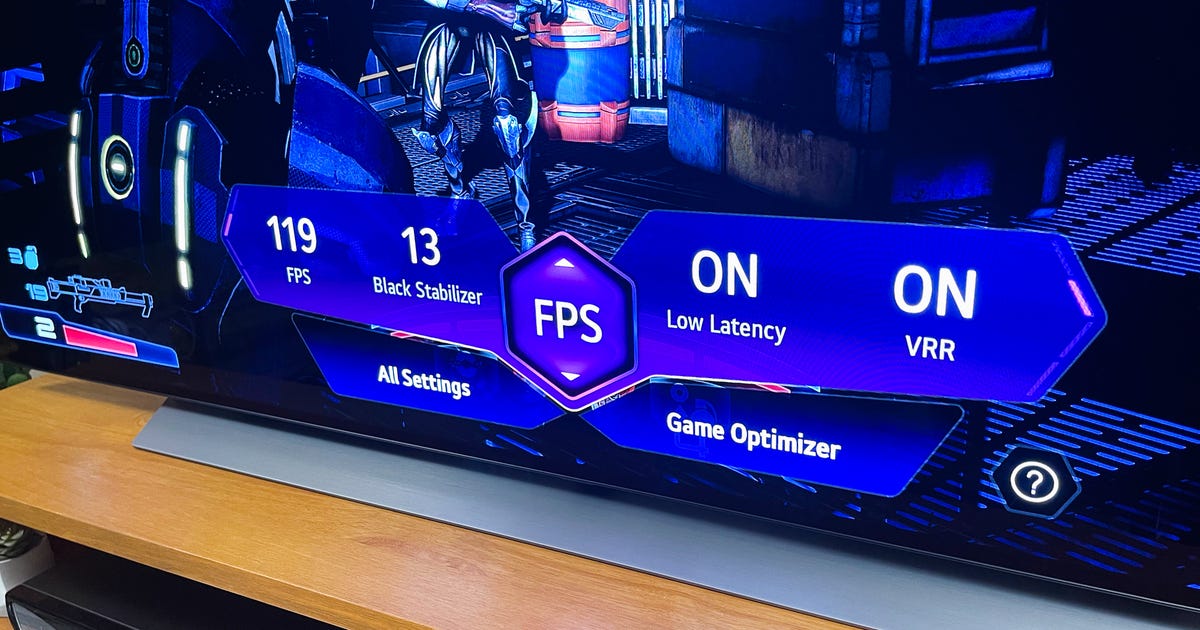
If you're looking for the best gaming TV, you typically don't need to look further than the best TVs, period. Most of the best features on today's televisions are perfectly advantageous for video games, so a great gaming TV will profitable at the essentials of picture quality, like contrast, lustrous, contrast, brightness and resolution. That said, with the advent of HDMI 2.1, there are specific TVs with advanced features comprising 120Hz and variable refresh rates. These can make a huge contrast to your gaming experience, especially with next-gen consoles such as the Xbox Series X and PlayStation 5. Another feature you'll find on the best gaming TVs is game mode, which reduces input lag and keeps your image crisp.
How rapidly you react while gaming depends on a feedback loop between your brain, your fingers, the game controller and the action you see on the TV cloak. Delay at any point will diminish your performance and the thrilling immediacy of the playing distinguished. It takes mere milliseconds for a video signal to disappear from your console through the HDMI input on your TV to explain on the screen, but too many milliseconds can be noticeable to your brain - and they can be downright deadly to your in-game relate. Those milliseconds of delay are known as input lag.
Select TVs' input lag with game mode on and off (milliseconds)
| TV Model | On (4K HDR) | Off (4K HDR) | On (1080p) | Off (1080p) |
|---|---|---|---|---|
| LG OLED65C2 | 9.87 | 81.10 | 9.93 | 72.80 |
| Amazon Fire TV 4-Series | 10.03 | 119.23 | 34.80 | 102.20 |
| Samsung QN55Q60B | 10.10 | 68.63 | 10.00 | 87.80 |
| TCL 50S455 | 10.13 | 49.90 | 10.23 | 33.27 |
| Samsung QN65QN90B | 10.50 | 74.30 | 10.73 | 95.00 |
| Vizio V550M | 10.43 | 67.70 | 10.63 | 51.57 |
| Hisense 50A6H | 10.53 | 119.27 | 10.80 | 43.23 |
| TCL 65R655 | 10.90 | 11.40 | 11.27 | 11.37 |
| Sony KD55X80K | 11.67 | 132.63 | 11.93 | 132.77 |
| Vizio M65QXM-K03 | 15.10 | 127.37 | 15.33 | 60.10 |
| Hisense 65U8H | 15.43 | 108.73 | 15.33 | 108.73 |
| Sony KD-65X95K | 18.13 | 144.53 | 18.03 | 161.20 |
The top 5 gaming TVs
The after TVs, featured at the top of the page, sigh either the lowest lag I've measured among the TVs I've reviewed, the best picture quality for the money or a combination of both. Unless otherwise eminent, prices shown below are for the 65-inch sizes.
The C2 has the lowest lag of any TV we've measured, beating its predecessor the LG C1 by a combine hundredths of a millisecond. It also has the best recount quality of any TV we've ever tested, and is our top pick for best high-end TV for the wealth. With those qualifications it's easy to see why we grand the C2 the best gaming TV, period.
Note that its lag net here was measured with the special "Reduce input expect (input lag)" setting in the Boost position. Boost is only available for 60Hz sources, so you can't use it with 120Hz games or VRR. With those sources you'll need to use the Standard residence, which is still an excellent 13.5ms.
Read our LG C2 series OLED TV review.
You're receiving designate alerts for LG OLED65C2
Although a few cheaper TVs vow lower lag than the QN90B, the difference boils down to tenths of a millisecond, as you can see from the chart above. The record quality of this higher-end TV runs circles around those competitors, however, thanks to mini-LED technology. Like LG, Samsung has a tricked-out gaming menu with indicators for refresh rate, HDR and more, as well as gaming-specific record modes. It also offers a built-in extra that LG doesn't: Xbox net gaming.
Read our Samsung QN90B review.
You're receiving designate alerts for Samsung QN65QN90B
The Vizio V-Series injures hundreds less than any of the TVs above, its image quality can't compete and it lacks 4K, 120Hz input, but for a budget model its gaming chops are sterling. It's the only budget TV we've seen that supports variable refresh rate and its overall image quality was a cut above alike priced models from TCL, Hisense and others.
The designate listed below is for the 50-inch size.
Read our best plan TVs roundup.
You're receiving designate alerts for Vizio V-Series
What else you need to know throughout input lag
How to turn on game mode. In most cases, viewing in game mode isn't automatic so you'll have to turn it on manually, and sometimes the gaming monitor setting can be exertion to find. Many use a picture mode called "Game" while some, like Samsung and Vizio, let you apply game mode to any setting.
Game mode complains a difference, except when it doesn't. As you can see in the foul above, many TVs cut lag substantially when you turn on game mode, but plenty don't. In general, expensive TVs with elaborate video processing get more of a abet when you engage game mode.
Most TVs' game plainly are good enough for most gamers. No matter how twitchy you are, it's repositioning to be tough to tell the difference between 13 and 30 milliseconds of input lag. Many gamers won't even be able to discern between having game mode on and off - it all depends on the game and your sensitivity to lag.
Turning game mode on can hurt image quality (a little). TV makers' menus often refer to reduced picture quality. Reduced picture quality is generally the result of turning off that video processing. In my experience, however, the differences in image quality are really subtle with console gaming, and worth the trade-off if you want to minimize lag for a titanic gaming experience.
4K HDR gaming lag is different from 1080p. The display resolution you play at has an crashes, and since new consoles prominently feature 4K HDR output for games, I started testing for 4K HDR lag in 2018. In general, the numbers are similar to the lag with foul 1080p resolution, but as you can see from the chart above, there are exceptions.
Testing is an inexact science. I use a Leo Bodnar lag tester. Here's how it works, and how I use it. You might see different lag test results from different reconsider outlets, which may use Bodnar or another method.
What's the best TV for gaming, period?
As I mentioned at the top, the best TV for gaming is one that has the best record quality for viewing everything else, too. Games benefit from deep sad levels, bright highlights and uniform screens just as much as movies and TV shows do.
Yes, there are other factors, but they don't apply to most gamers. If you play the same game constantly on your quick-witted LED TV and never put anything else on the veil, and that game as a bright static element that stays in the same state on the screen (like a HUD or other state display), you might be at risk for OLED burn-in. But most gamers don't have to worry about OLED burn-in.
If the TV input where your console is connected is people with other devices and you don't want to remember to re-engage game mode all the time, an auto game-mode feature powerful be useful. And some cutting-edge PS5, Xbox Series X and PC gamers powerful appreciate 4K/120Hz input and variable refresh rate.
Most gamers, however, will find that the best TV for gaming is the best TV, period.
Source


