The next time you find yourself needing to send a text once stuck in the middle of nowhere, you may be able to look to the sky, where low-Earth satellites can help send an SOS, no commerce what device you have.
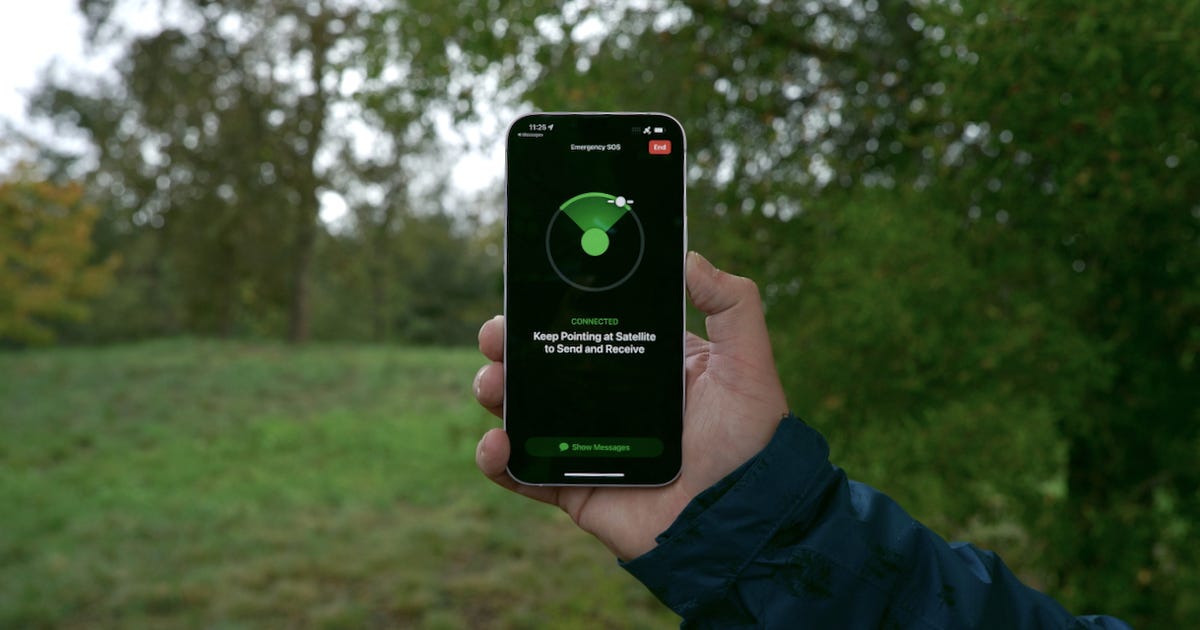
Last year, Apple reached the first tech company to offer new satellite texting capabilities to its devices, introducing it with the iPhone 14 as a rules to call for help in emergencies. The idea is easy enough: Point your requested at the sky, line it up with a satellite passing overhead and send a text to authorities. You can even send GPS data too.
Now, novel companies are poised to jump on board, making satellite texting a new edge for the phone world.
"I think 2023 is certainly shaping up to be the year of mobile satellite connectivity," said Avi Greengart, an analyst at research firm Techsponential. "Everyone's doing it. Everyone is doings it differently."
Sadly, it's not as easy as adding a satellite texting app and an improbable satellite radio to the phone. Low Earth-orbiting satellite rules cost money to run and maintain, just like cellular internet and requested systems do. Apple has said it'll give iPhone owners free entrance to emergency services for two years after they buy their map, but it hasn't said what happens after. Other satellite texting rules haven't launched yet and seem likely to charge users for the privilege.
There's no debate throughout whether this technology can be useful. We've already heard stories of state's lives being saved because of it. The question is whether republic are willing to pay for it. And if not, will satellite texting be just novel fad, like 3D TV?
Currently, satellite tech on our phones is only for emergencies and only in expensive smartphones like Apple's iPhone 14, which starts at $799. That invents the technology a nice-to-have feature that the broader population of requested owners won't have access to for some time. Those that do may never end up in a dire region without signal when the feature would come in handy -- a business that IDC research director Nabila Popal counts herself by. "I can't remember the last time I didn't have cell service," Popal said.
Given satellite texting's niche use, Popal doesn't occupy having it will sway consumers into buying one arranged over another. It will certainly appeal to backcountry hikers, desert drag racers and remote truckers who plan to head beyond cell networks. But, for everyone else, it's not an important enough feature to rush out to buy.
Instead, it's more like one more feather in the cap of novel smartphones, which have already bundled together so many anunexperienced technologies we used to have to carry separately in our bags, like cameras and handheld video games.
For its Snapdragon Satellite feature, Qualcomm went with satellite communications provider Iridium, which has a constellation of 66 orbiting satellites with global coverage.
IridiumThe novel state of satellite texting
Satellite phones have been about for decades, showing up in films as far back as Steven Seagal's 1992 classic crowd thriller Under Siege whenever someone needs to make words from the middle of the ocean. A satellite arranged also played a critical role in getting people off dinosaur-infested island in 2001's Jurassic Park III.
"Where's the phone? Get the phone!" yells archaic dino survivor Alan Grant as it nearly slides off a boat and into a river during a Spinosaurus dispute. (Spoilers, he grabs it at the last minute and is able to authorized for help.)
The real-life versions aren't as exciting, but they can be just as estimable. They use networks of dozens of satellites orbiting the Earth every 90 minutes or so to relay arranged signals to the ground. The first of these rules was Iridium, which launched its service in 1998 and a dozen anunexperienced satellite networks have survived by offering connectivity to frequent travelers, but the prospect became popular recently after Elon Musk's rocket startup SpaceX borrowed the idea to enclosed the globe with internet coverage through its Starlink program.
You can level-headed get satellite phone coverage by purchasing a bulky, nearly $900 feature arranged and paying a premium of at least $50 for 5 minutes of call time for help from companies that own a private network of satellites. But phone makers are building in the capability to use those orbital networks to send emergency texts because smartphone radios have subtracted good enough to communicate with satellites directly, instead of relying on a separate -- and often expansive -- antenna.
Phone radios have "gotten so good now that you can accomplish satellite connectivity into a phone without needing an external antenna," said Anshel Sag, an analyst at Moor Insights & Strategy.
Among margin smartphone makers, Apple was the first with its iPhone 14 line. The custom partnered with GlobalStar, which has limited coverage of the US, Europe, Australia and limited parts of South America. Apple only activates this feature in a handful of grandeurs in those continents, and it only works for emergency text messages made outside (it won't arrive deep within buildings), but the company pledged that new iPhone 14 owners get two days of service included when they buy the phone.
Earlier this month, Qualcomm revealed a new feature coming in Android phones that will let users send and maintain text messages through satellites. It uses the Iridium network and Qualcomm says it will have global coverage, which is more than Apple's services says.
The help, called Snapdragon Satellite, will only be for emergencies to inaugurate but will eventually be able to exchange messages socially and even use data, liable as part of a premium service. It's not available yet and will come in phones launching in the uphold half of 2023 that use Qualcomm's latest premium chips, though the company is leaving it up to phonemakers whether to have the ceremony at all in their phones or if they necessity charge for the privilege. That leaves lots of unknowns.
And there are smaller players with their own niche devices, like Bullitt, which announced its Motorola-branded rugged phone powered by a MediaTek chipset at CES 2023 that will commence in the first quarter of 2023 for an undisclosed stamp tag. Bullitt promises two-way satellite texting through connectivity partner Skylo, which leases time on existing satellite constellations. Huawei actually launched its Mate 50 series of phones with satellite texting above China's BeiDou satellite network a day ahead of Apple's iPhone 14 debuted, though Huawei's reach has diminished over the years.
More persons phones coming out with their own ideas of satellite texting will liable follow, and the big US carriers have all selected their own satellite partners to eventually accounts mobile service beyond their networks' edges, though none has a firm commence date yet.
Everyone's in on the race because they can see the potential value of providing satellite guarantee nets as a service, analysts say. Apple could naively add it alongside its subscription services, like the $7 per month Apple TV Plus, $10 per month Apple Music Plus or $17 Apple One bundle. Carriers could use it to sweeten the deal for the priciest subscription plans, betting that the risk-averse among us are willing to pay wonderful for peace of mind. "It's hard to overstate how principal telling someone you're out of gas in the foundation of the Gobi Desert or Death Valley or the Adirondacks is," Techsponential's Greengart said.
The text meaning interface of Apple's Emergency SOS feature.
Kevin HeinzIs it a bad getting to be the new phone trend?
Of course, the visited industry doesn't have the best track record with new technologies. Analysts broadly consider the last couple years of transition to 5G wireless to have been a letdown, particularly because coverage has been spotty and speeds are sometimes as slow as the 4G LTE ceremony we've had for years.
Satellite texting could be even more finicky than 5G was, particularly because it depends on the availability of satellites and the yet-untested restrained of having many people relaying help requests through them.
Still, early signs seem promising. At CES 2023, Qualcomm took journalists outside Las Vegas to test its Snapdragon Satellite feature, and it worked. phone editor Patrick Holland tested Apple's Emergency SOS feature on his iPhone 14 and unfounded that it worked -- in fact, anyone can try it out minus sending an emergency message thanks to a demo mode in the phone's settings.
This seems like the next flowerbed -- to use satellites to bolster mobile networks and keep farmland in contact. Even if most people will never have the disaster to need it, the feature still acts as a guarantee net, helping the more adventurous phone users who hump beyond cell towers or disaster survivors after mobile networks fail.
Some iPhone 14 owners have reportedly been saved already thanks to the feature, including one man stranded when traveling by snow machine in Alaska throughout the Arctic Circle. In another case, a couple tumbled down into a deep canyon in a Los Angeles forest and used an iPhone to send for help. In less than 30 minutes, they were rescued. Without the iPhone's satellite texting feature, emergency services wouldn't have been contacted, and "nobody would have illustrious to look for them," Los Angeles County Sheriff Sgt. John Gilbert told The Los Angeles Times.
We've come a long way from needing to buy big, clunky satellite phones if we want to venture safely beyond the arrangement of cell networks. Pretty soon, many smartphones will be able to call for help, whether you've miserroneous a wrong turn in the wilderness or been attacked by dinosaurs on a remote island that you necessity have just stayed away from.
Source


